By Jerry Kolins, MD, DipWSET, Certified Sommelier, LS&A, Class of 1968
There have been superb books published on the art of pairing wines with food. But we have not had adequate direction in pairing wines with sports victories. Let me suggest that a celebration of a championship ice hockey team must be paired with an appropriate ice wine.
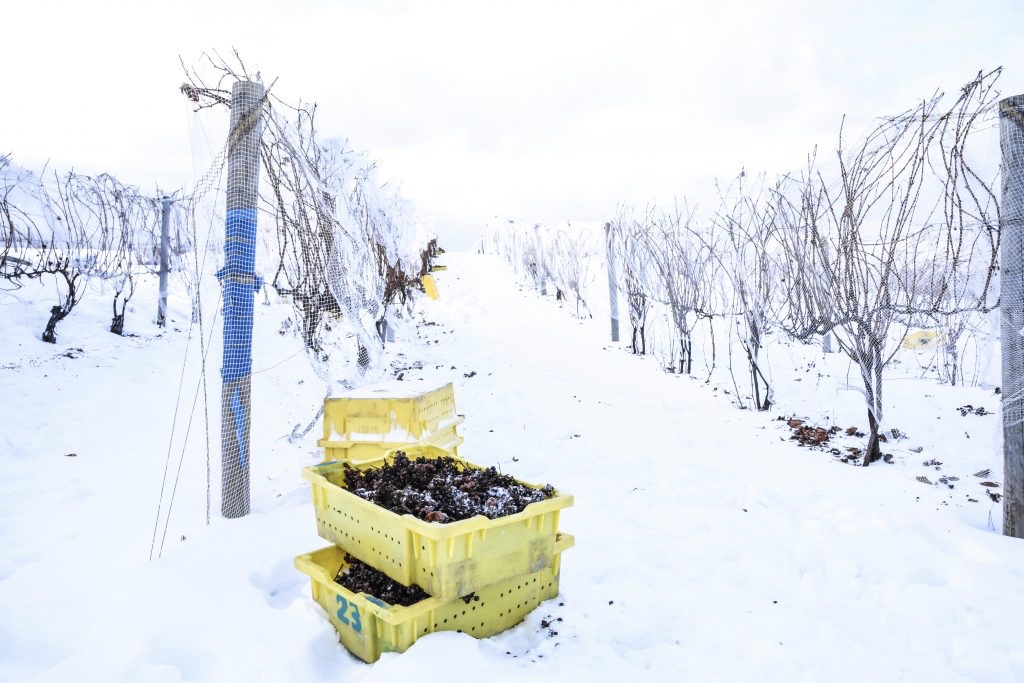
The majority of the world’s ice wine is made in Canada and Germany. This requires a climate found at around the 50th parallel in the northern hemisphere. You cannot make this nectar without harvest temperatures of around 15-18°F because to accomplish the task of making ice wine, the grapes must be frozen on the vine. Then, with a cold press, the grapes are squeezed to release their juice. The ice crystals stay behind. Therefore, the juice is a highly concentrate sweet nectar due to the absence of the water expected in a regular wine crush.
The consequence of this activity is a wine that is balanced with sweetness and acidity needed to make a delectable beverage. Let me explain that last sentence. A great ice wine needs a balance of sweetness and acidity much like a good lemonade needs a balance of lemon and sugar. Can you imagine sipping a lemonade in which the sugar was overdosed? The lemon adds the acidity needed to make a superb refreshment.
To celebrate an American ice hockey champion, one could turn to Europe where great ice wine is made in Alsace and Germany. North America also produces some great ice wines. Inniskillin Riesling Ice Wine from Niagara Peninsula is outstanding. But it is a Canadian winery in Ontario and British Columbia. The collegiate ice hockey championship playoffs, referred to as the Frozen Four, is strictly an NCAA event. I must recommend a wine made in the USA.
All wines I recommend are from wineries in which I have no financial interest. When I buy a wine that I recommend, I purchase it at retail price from producers who have no knowledge of my intent to evaluate their work.
On April 9, 2026 in Las Vegas the tournament commences with the Michigan Wolverines facing the University of Denver Pioneers followed by the North Dakota Fighting Hawks vs. the Wisconsin Badgers. The winners vie for the National Championship Trophy on April 11th in the T-Mobile Arena.
Considering that Michigan won the Big Ten Ice Hockey Tournament against Ohio State on March 21st and Michigan is the #1 seed for the NCAA tournament, let’s go to Michigan for the appropriate ice wine. It certainly gets cold enough in northern Michigan to make this happen.
To make ice wine, one needs freezing cold temperatures at the time of harvest. In Michigan there are a few wineries that can do this. Black Star Farms, Chateau Chantal, and Fenn Valley Vineyards are front and center. Their wines generally cost about $50-90 for a half bottle (375 ml). If you wonder why the wine is so expensive, consider this: All the grapes are frozen solid at harvest and hand-picked around Christmas time by the hardiest of souls. Then the grapes must be crushed and pressed to get the juice to make wine. But the amount of juice per grape is only about 20% of the juice you would get if you crushed the harvest at ambient temperatures. The water in the frozen ice crystals is left behind leaving only the highly concentrated juice available for fermentation.
Because ice wine is sugar rich, it takes 3-6 months for fermentation to be complete. Regular white wine takes less than three weeks. The experience is worth the price whether or not your team wins the game.
Ice wine is often described as the perfect dessert with aromas of baked apples, apricots, peach, and honey. The Riesling grape varietal is highly prized for these qualities. But if your preference is red, Cabernet Franc makes an exciting ice wine and is available from Chateau Chantel. Their website notes that their wines were served at a Canadian state dinner at the White House in 2016.
Recommendation: Available from Chateau Chantel is their Riesling Ice Wine, Old Mission Peninsula, 2023 which won the Michigan Governor’s Cup Gold.

Leave a Reply